Low-Temperature Burns: What They Are and How to Avoid Them
When the Hong Kong Observatory issues the Cold Weather Warning, heat packs, electric blankets, fan heaters and infrared lamps come out of the cupboard. Most of the skin injuries they cause do not come from a surface that is obviously too hot. They come from warmth that feels pleasant but stays on the same patch of skin for too long. That is a low-temperature burn. This guide explains how it happens, who needs extra care and how to use an infrared heat lamp, a heat pack or an electric blanket with sensible limits.
What is a low-temperature burn?
A low-temperature burn is skin damage caused by moderate heat over a long time rather than by a short touch of something very hot. Because the heat builds slowly, the skin can be injured before it feels too hot to bear. At first the patch may only look red; later it can blister, and the damage can turn out deeper than it first appeared.
Burn research dating back to 1947 (Moritz and Henriques, in the American Journal of Pathology) found that skin held at around 44°C can be injured if the contact lasts for hours, and that the time needed falls quickly as the temperature rises. The Consumer Council's CHOICE magazine (issue 556, February 2023), in its look at home infrared lamps, describes warmth of about 40 to 45°C as the comfortable range and warns that above 45°C the skin can burn. The feeling to aim for is gentle, comfortable warmth, never scorching heat.
Where low-temperature burns come from at home
Any heat source that stays close to the same area for a long time can cause one. In Hong Kong homes in winter, these are the usual suspects.
| Heat source | How it goes wrong | A sensible limit |
|---|---|---|
| Heat pack | Stuck directly on the skin or kept in a pocket against the body for hours | Follow the pack's own instructions, keep a layer of clothing between pack and skin and never keep it on while you nap |
| Electric blanket or heating pad | Left on high all night, or lain on in one position for a long time | Warm the bed in advance, then switch off or use the timer before you lie down |
| Fan heater or radiator | Placed close to the legs while you sit still for a long time | Keep a clear distance and move it away from blankets, curtains and anything that can burn |
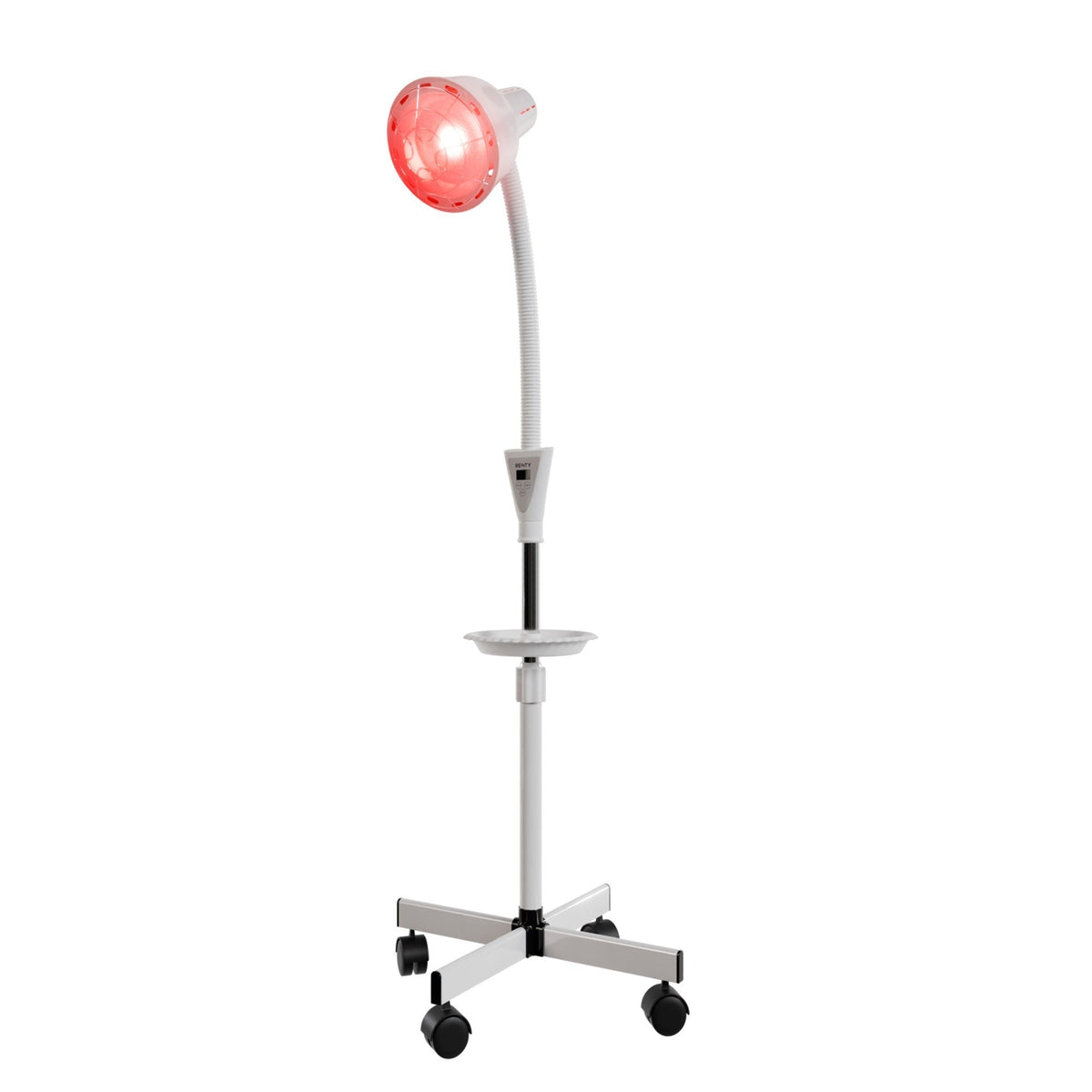
| Infrared heat lamp | Aimed too close, run for too long or left on while someone dozes off | Start at about 40 cm and 10 to 15 minutes, set the timer and stay awake |
Who should take extra care
Some people notice heat later than others, so the warning signs arrive late. The Consumer Council article names older people and people taking certain medicines, whose skin may sense heat less well, among those who can be burned without noticing it; it advises against home infrared lamps for them, and asks for extra care if one must be used. It also says that people who cannot follow the instructions should not use these lamps. Take extra care if the person using the heat:
- has reduced feeling in the skin of the area being warmed;
- cannot easily move away from the heat or switch it off;
- is drowsy from tiredness, alcohol or a medicine;
- is a young child who may not say that something feels too hot;
- tends to sit still in front of a heater or lamp for a long stretch, as many older relatives do on cold evenings.
If an older relative likes to sit in a warm corner all evening, keep the heater at a distance, let a timer switch it off and check the skin of the warmed area now and then, especially on the shins, knees and lower back, where heat sources are often aimed.
Using an infrared heat lamp with sensible limits
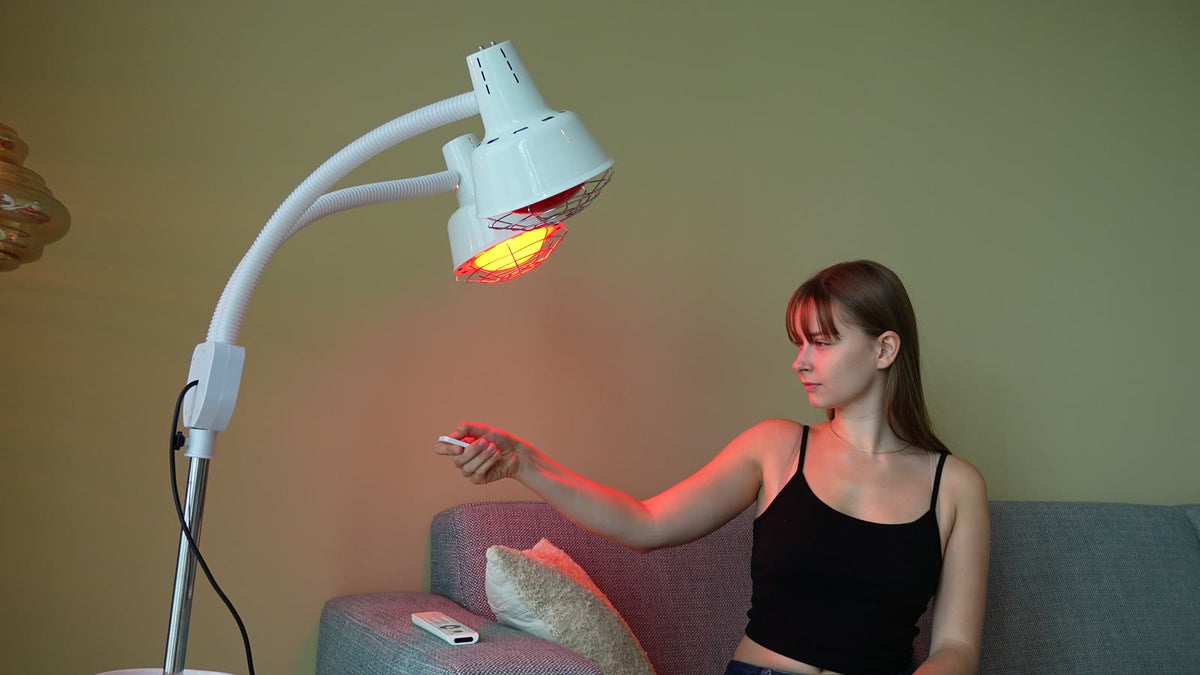
The Consumer Council sums up home infrared lamp use in three short rules: not too close, not too long and never stare into it. For the Resty lamps, that means the following.
- Not too close. The manual gives about 40 cm as the starting distance. When pleasant warmth turns into heat, increase the distance or lower the temperature setting rather than sitting it out.
- Not too long. Set the built-in timer to 10 to 15 minutes for a start, so the lamp switches off on schedule.
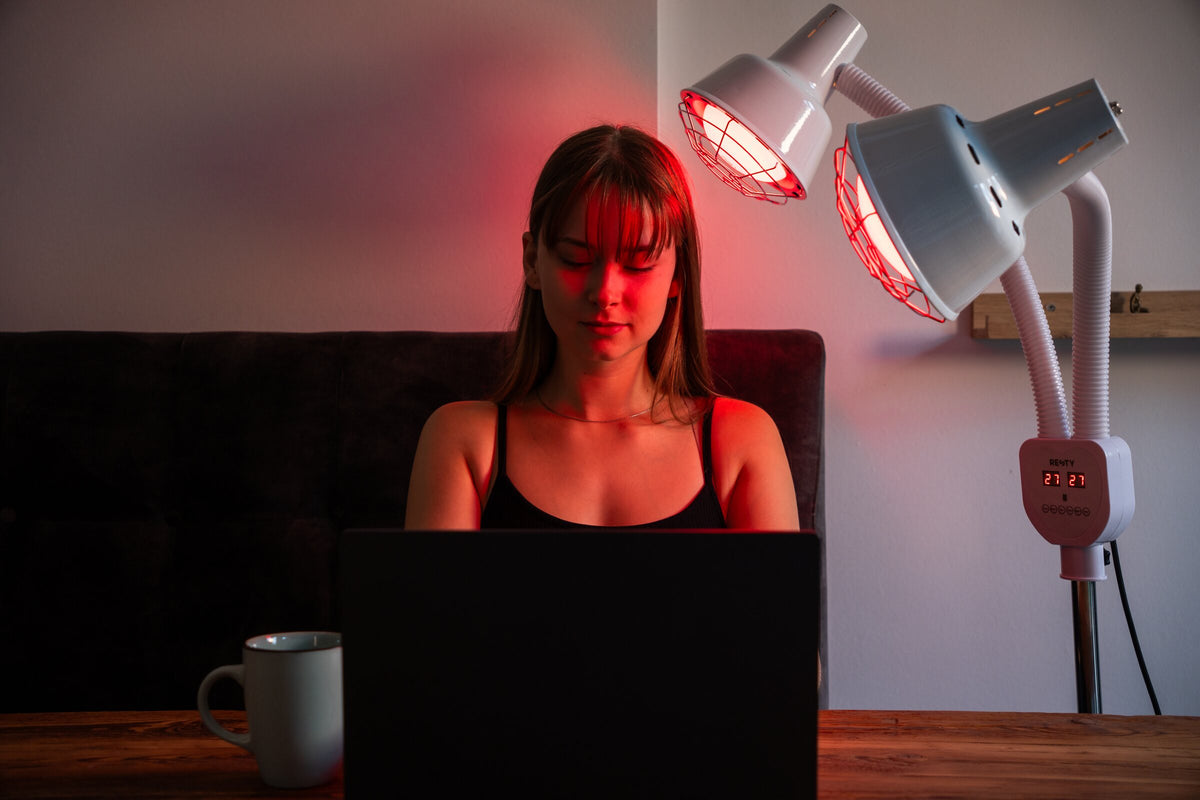
- Never stare into it. Aim the head from the side or slightly above, at the area you want to warm, not at your face.
- Bare, dry skin. The Consumer Council advises against putting lotion, massage oil or ointment on the area before using an infrared lamp, because heat can build up in it. Infrared from a home lamp also does not pass through clothing well, so aim it at uncovered skin rather than turning it up to reach through a jumper.
- A stable spot. Do not place the lamp head directly above someone who is lying down. Sit up, or lie on your side, with the lamp on a firm, level floor beside you.
Heaters and the Cold Weather Warning
When it issues the Cold Weather Warning, the Hong Kong Observatory asks people to make sure heaters are safe before use, to keep them away from anything that can burn and not to light fires indoors to keep warm. It also asks people to keep indoor ventilation adequate and to call or visit older relatives and neighbours who live alone. A quick look at how close a heater or lamp sits to an armchair is part of that visit.
If the skin turns red or blisters
Switch the heat source off or move it away straight away and let the skin cool under cool running water. Do not burst any blisters. A blister, a large area or any doubt about how deep the damage goes is a reason to get medical advice promptly.
Quick answers
At what temperature can a low-temperature burn happen?
From around 44°C if the contact lasts for hours, and faster as the temperature rises. That is why mild warmth on one spot for a long time matters as much as a brief touch of something hot.
Can I nap with a heat pack, electric blanket or heat lamp on?
No. Falling asleep means nobody notices the skin heating up. Switch heat sources off, or let a timer do it, before you doze.
What distance should I keep from a heat lamp?
Start at about 40 cm, as the Resty manual says, and move back if the warmth becomes hot rather than comfortable.
Our lamps and further reading
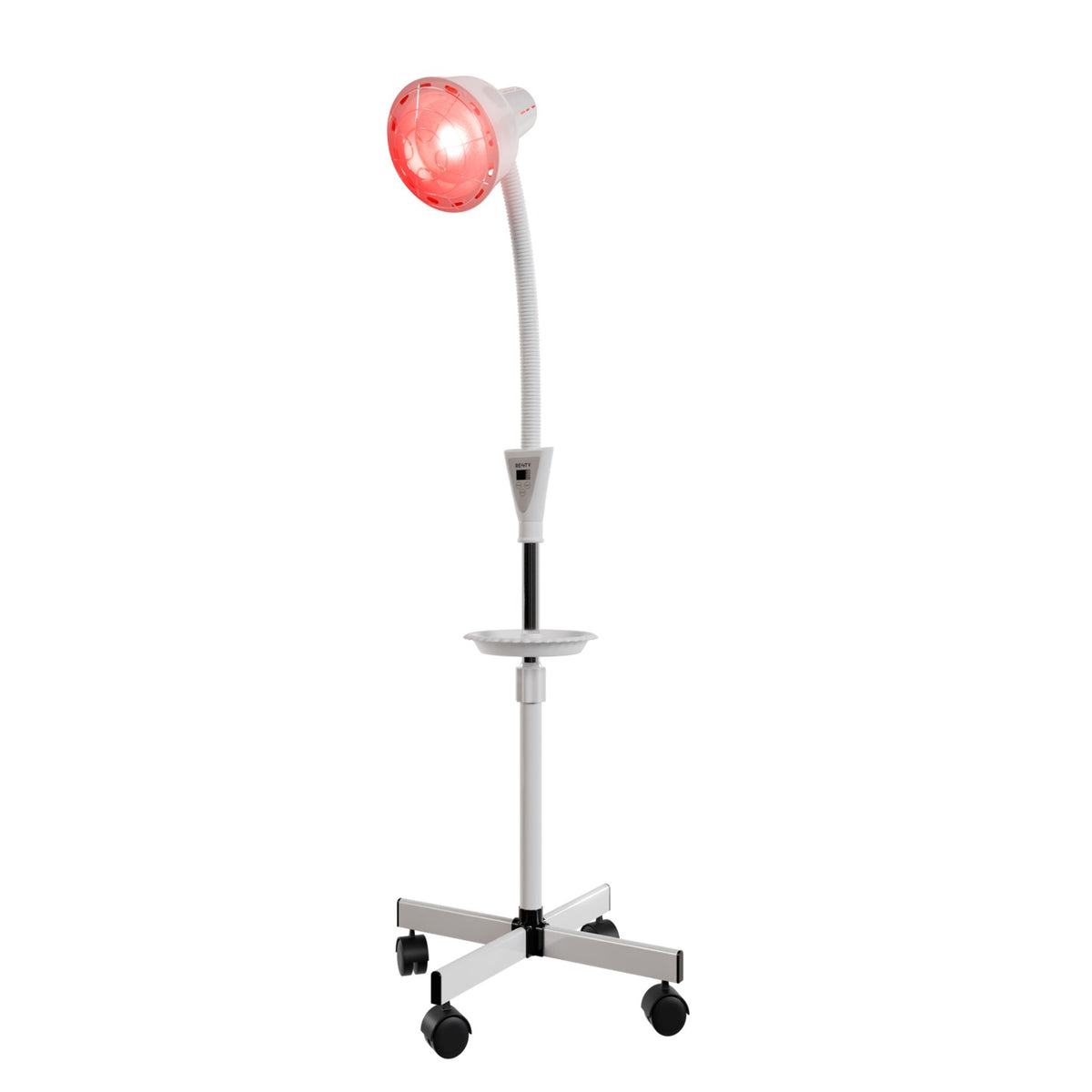
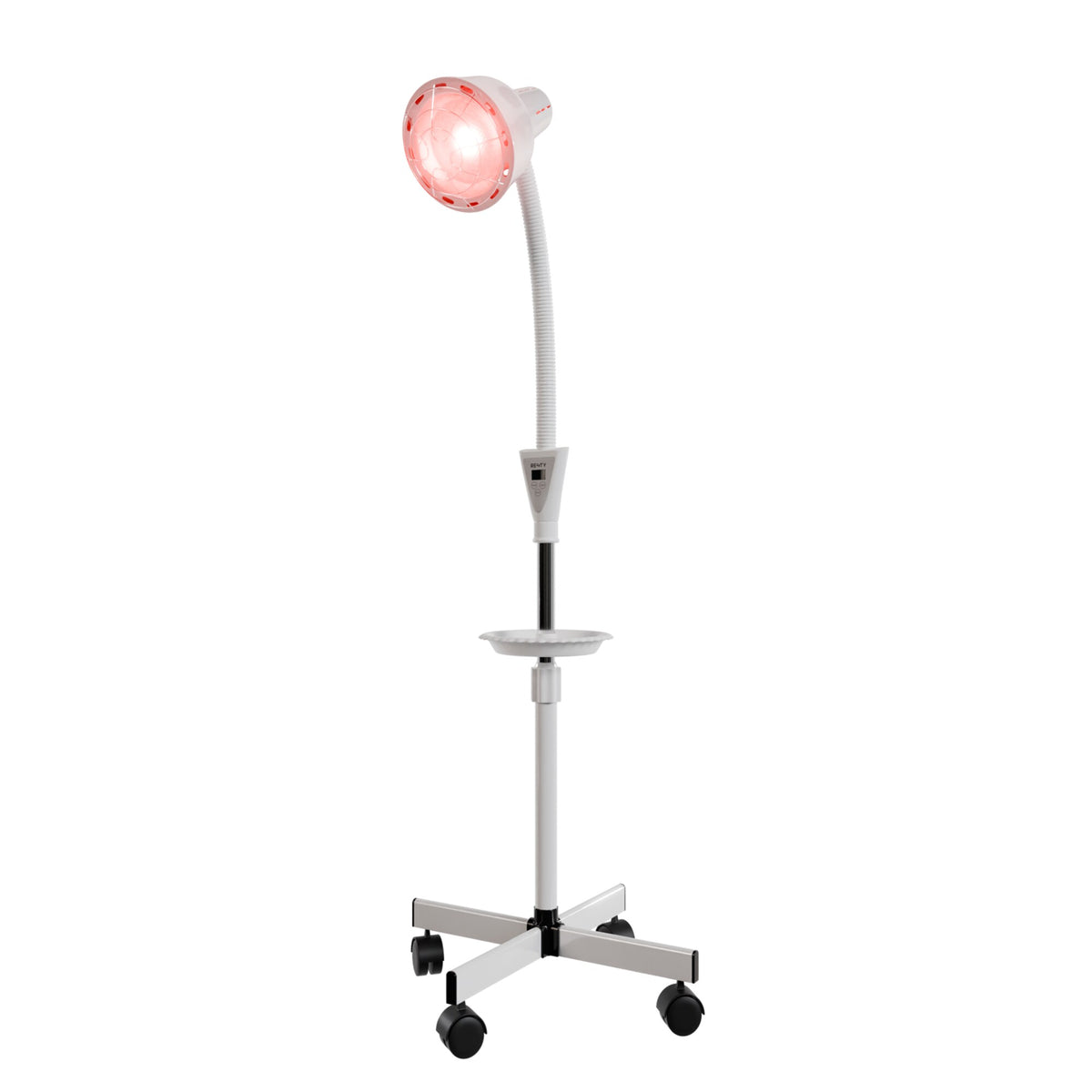
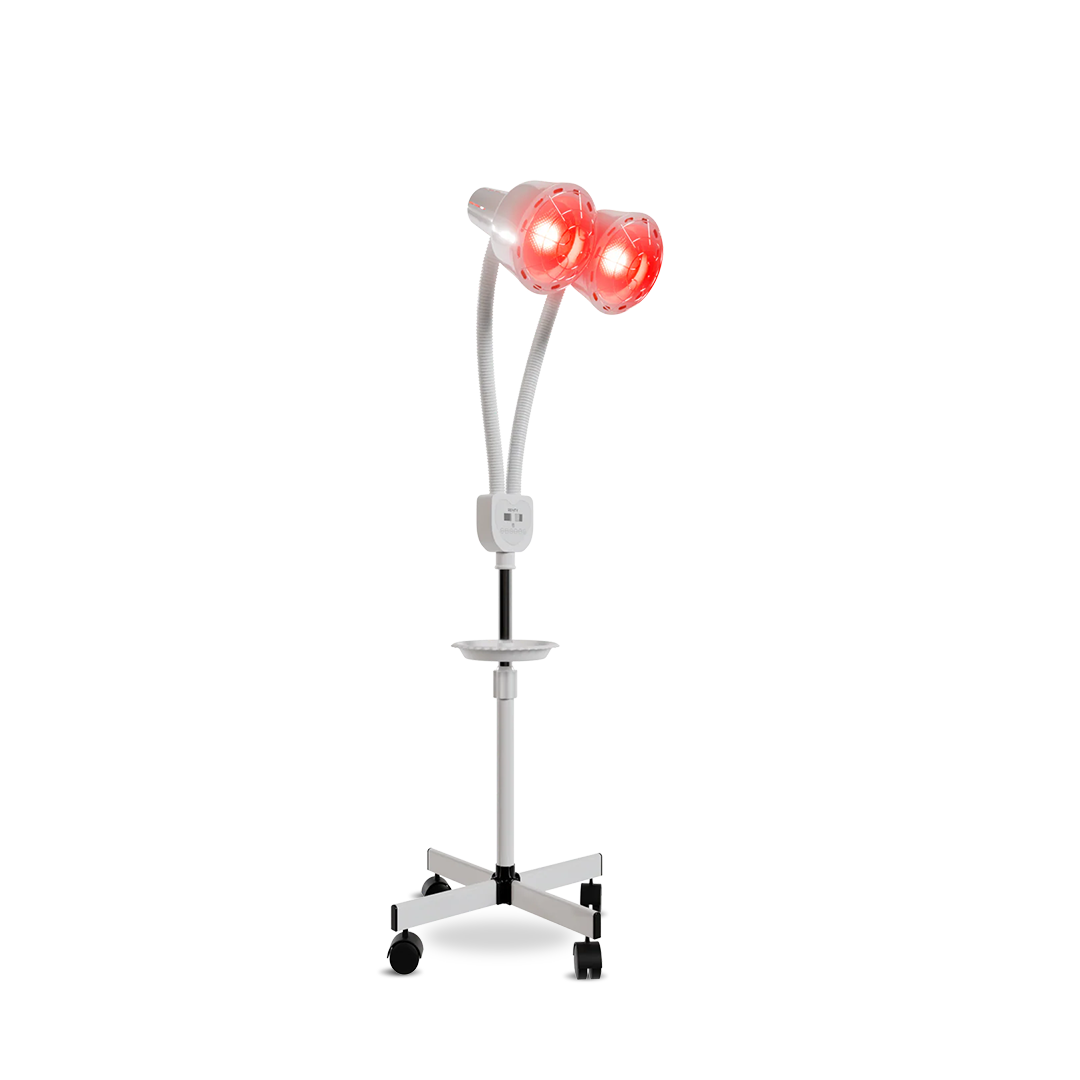
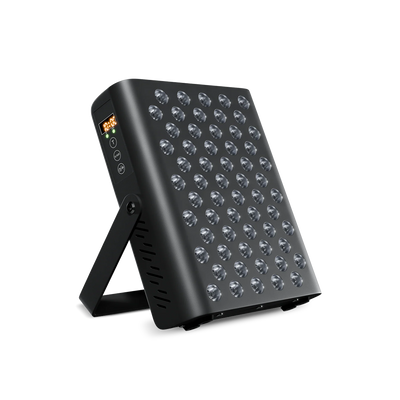
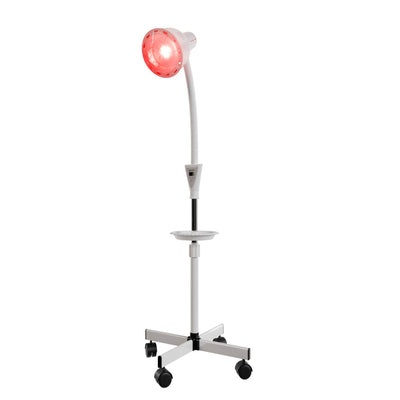
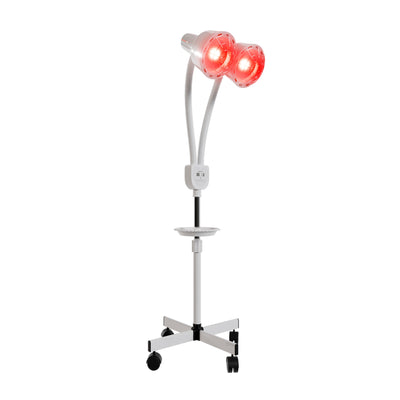
The 275W single-head lamp warms one area at a time, and the 550W double-head lamp has two independently adjustable heads. Each comes with a built-in timer, a temperature control and a remote control, and you will find both in the infrared heat lamp collection, and our infrared lamp guide covers assembly and set-up step by step. Comparing ways to stay warm? See infrared lamp, heater or heating pad.
Use and safety
- While the lamp is on, and until it has cooled, keep your hands off the bulb, the shade and the metal guard, and never stare into the light.
- Stay awake for the whole session and leave it to the timer to switch the lamp off.
- Switch off if the warmth becomes uncomfortable or your skin shows an allergic reaction, and keep the lamp away from skin that is irritated or broken.
- Heat sensitivity, reduced skin sensation, pregnancy or a relevant medical condition are reasons to speak to a healthcare professional before using the lamp.
- Children may be near the lamp only with an adult watching, and no water or other liquid should ever touch a hot lamp.
- Move or put away the lamp only once it is completely cold.