Near-Infrared, Far-Infrared and Red Light: What the Words Mean
Red light, near-infrared, far-infrared: the words appear on boxes of panels, lamps, heaters and even clothing, often without a number next to them. They describe where light sits on the spectrum, measured in nanometres (nm). This guide explains each word and how it applies to the two kinds of Resty product.
The spectrum in brief
The light you can see runs from violet at about 380 nm to the deepest red at about 780 nm. Beyond red comes infrared: you cannot see it, but you can feel it as warmth when there is enough of it. Infrared covers a wide range, from 780 nm all the way to 1 mm, so it is usually split into bands. The CIE, the international commission for lighting, uses three:
- IR-A: 780 to 1,400 nm
- IR-B: 1,400 to 3,000 nm
- IR-C: 3,000 nm to 1 mm
Shops rarely use these names. They say near-infrared for the part closest to visible red and far-infrared for the long-wave end, and the borders between the everyday words are looser than the CIE bands.
Red light
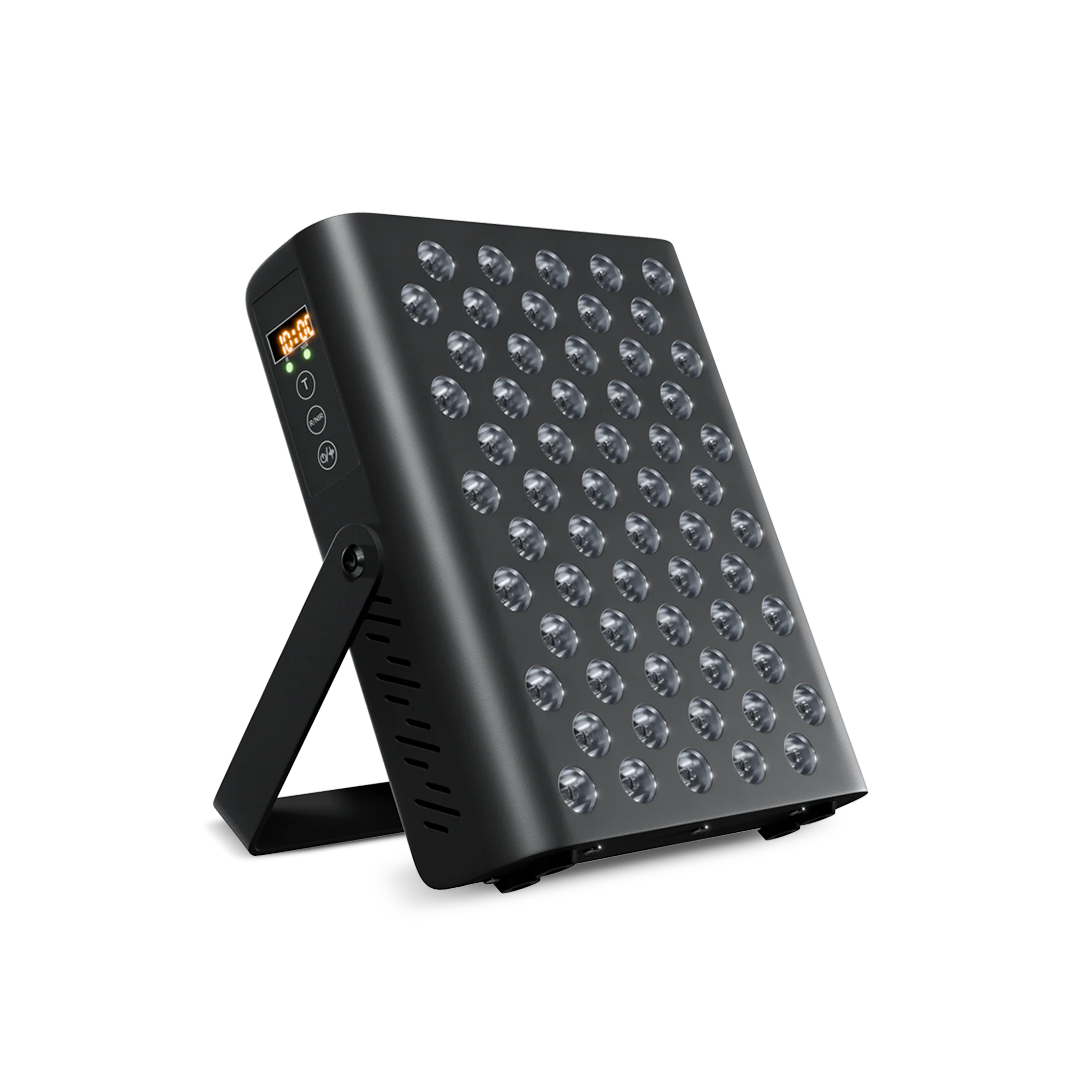
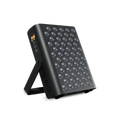
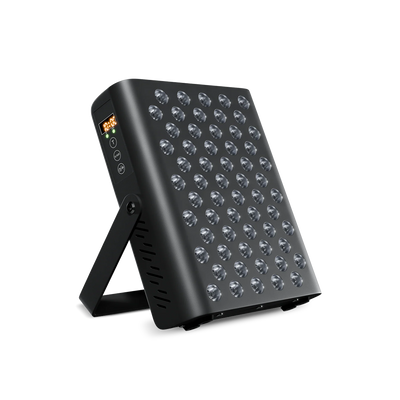
Red is the long-wave end of visible light, from roughly 620 nm upwards. A red light panel such as MARS 400 uses LEDs at about 660 nm, a deep red you see clearly. LEDs give off a narrow band around one wavelength, which is why a panel can name its wavelength in nanometres.
Near-infrared
Near-infrared, often shortened to NIR, is the part of infrared just past visible red, inside the IR-A band. MARS 400 has a second set of LEDs at about 850 nm, and its R/NIR button selects red, near-infrared or both.
Why 850 nm looks dim
The eye's sensitivity drops away steeply beyond about 700 nm. An 850 nm LED sends almost all of its light into a range the eye does not register, and only the very edge of its output is visible, so it shows as a faint red glow even when it is fully on. A dim NIR mode is not a fault: what you see is not a measure of what the LED gives off.
The infrared heat lamp: a short-wave bulb you feel as warmth
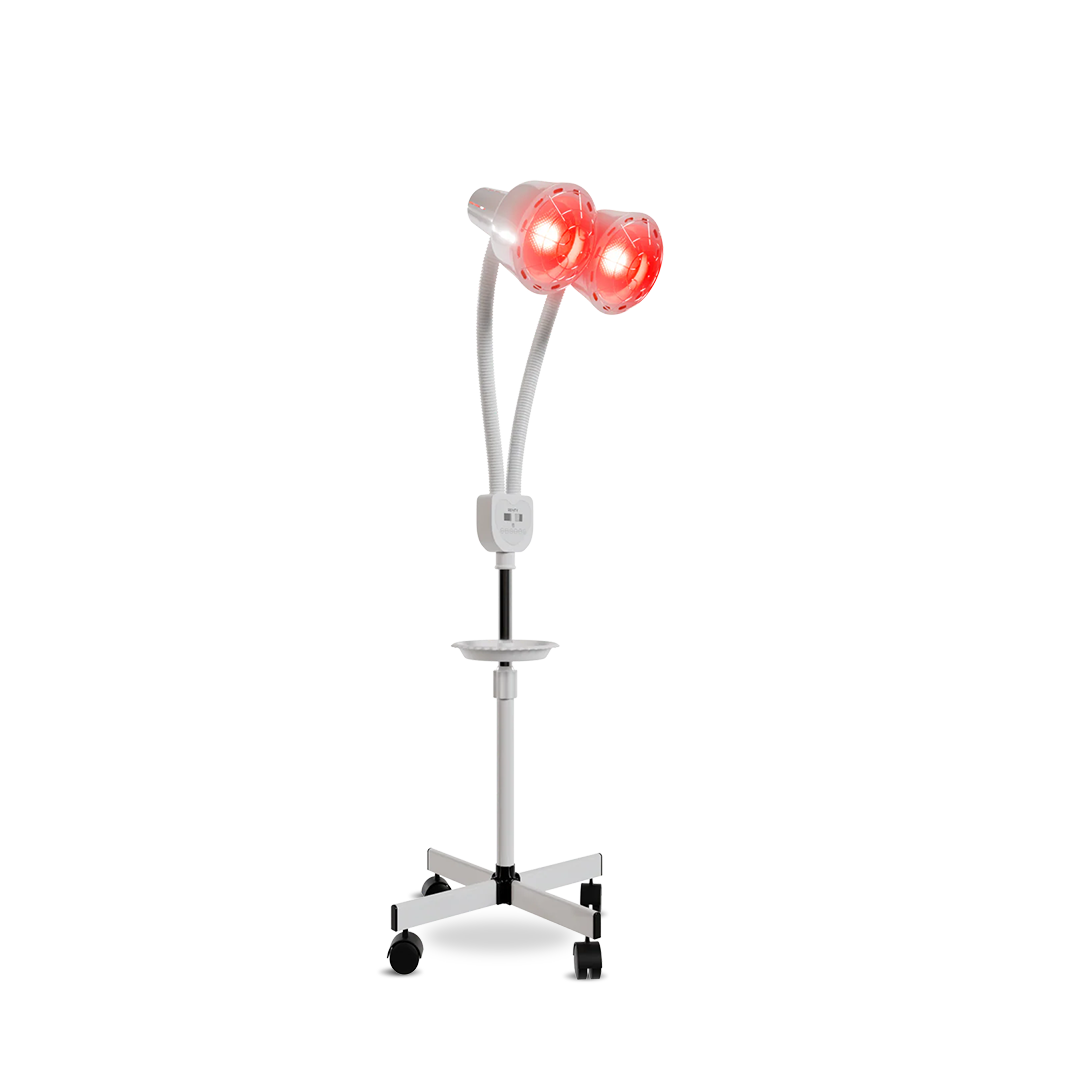
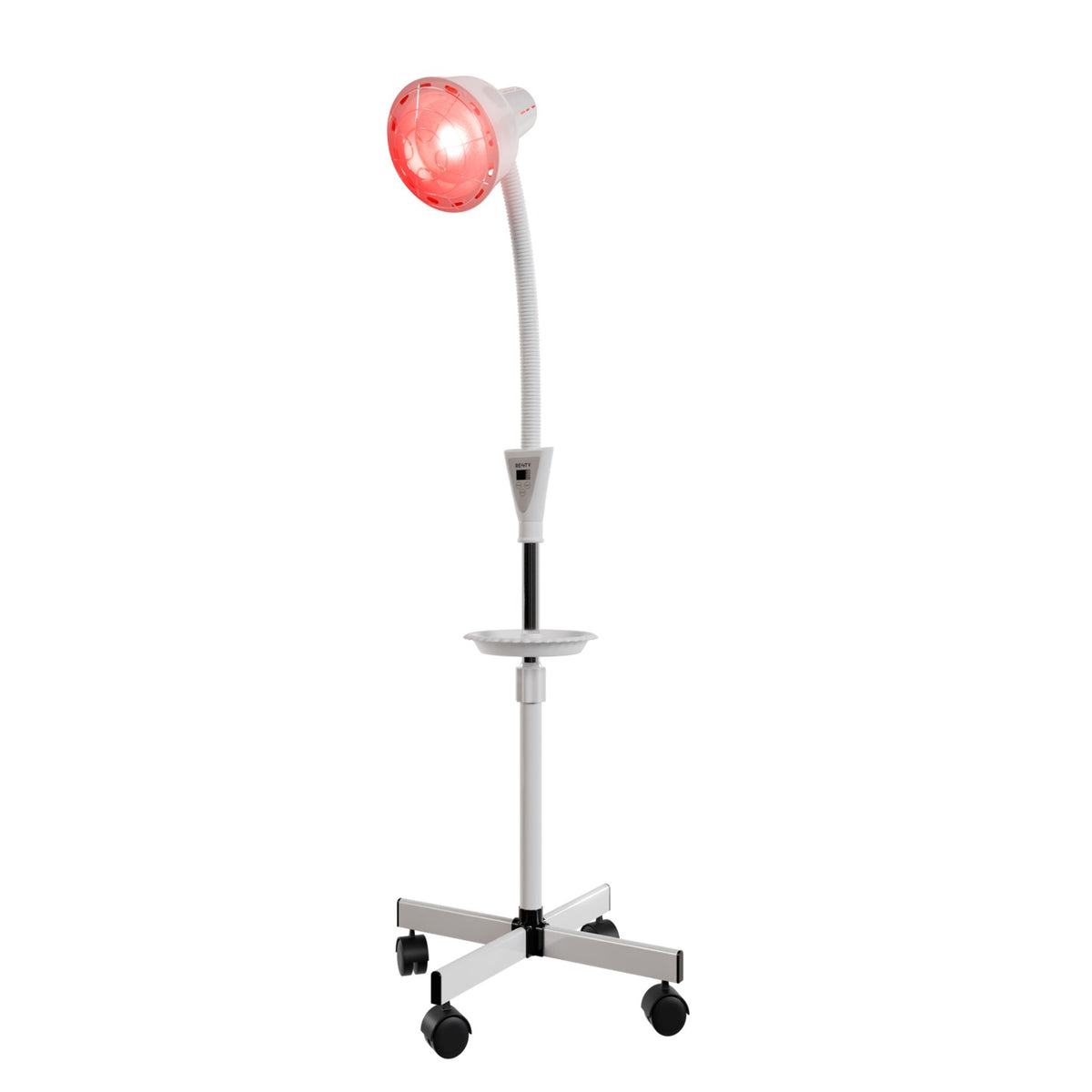
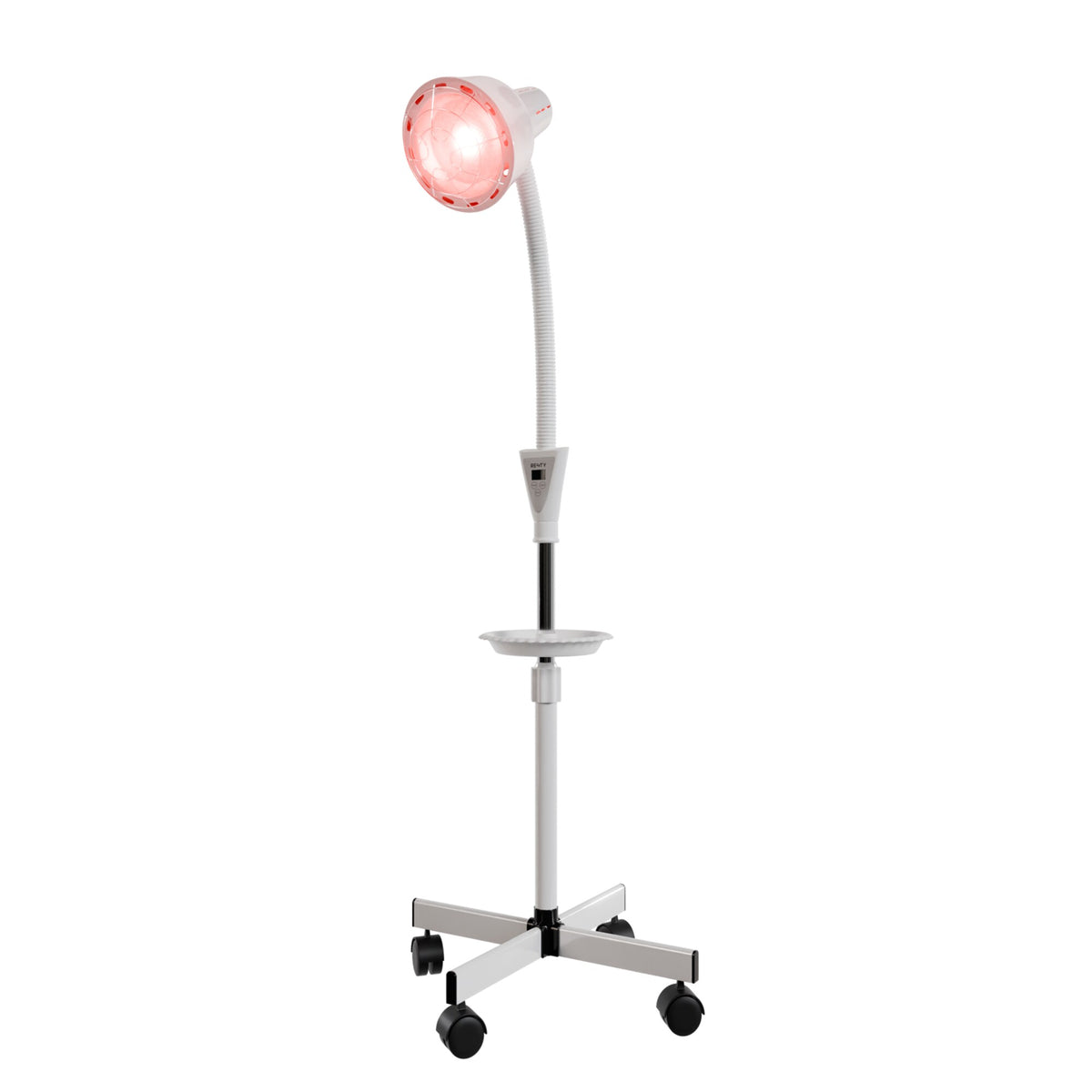
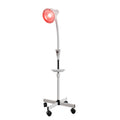
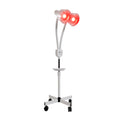
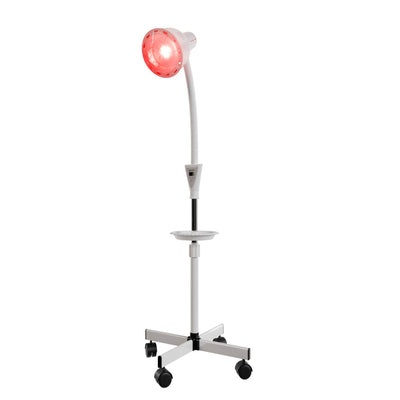
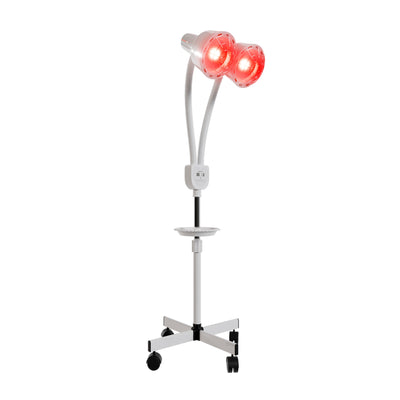
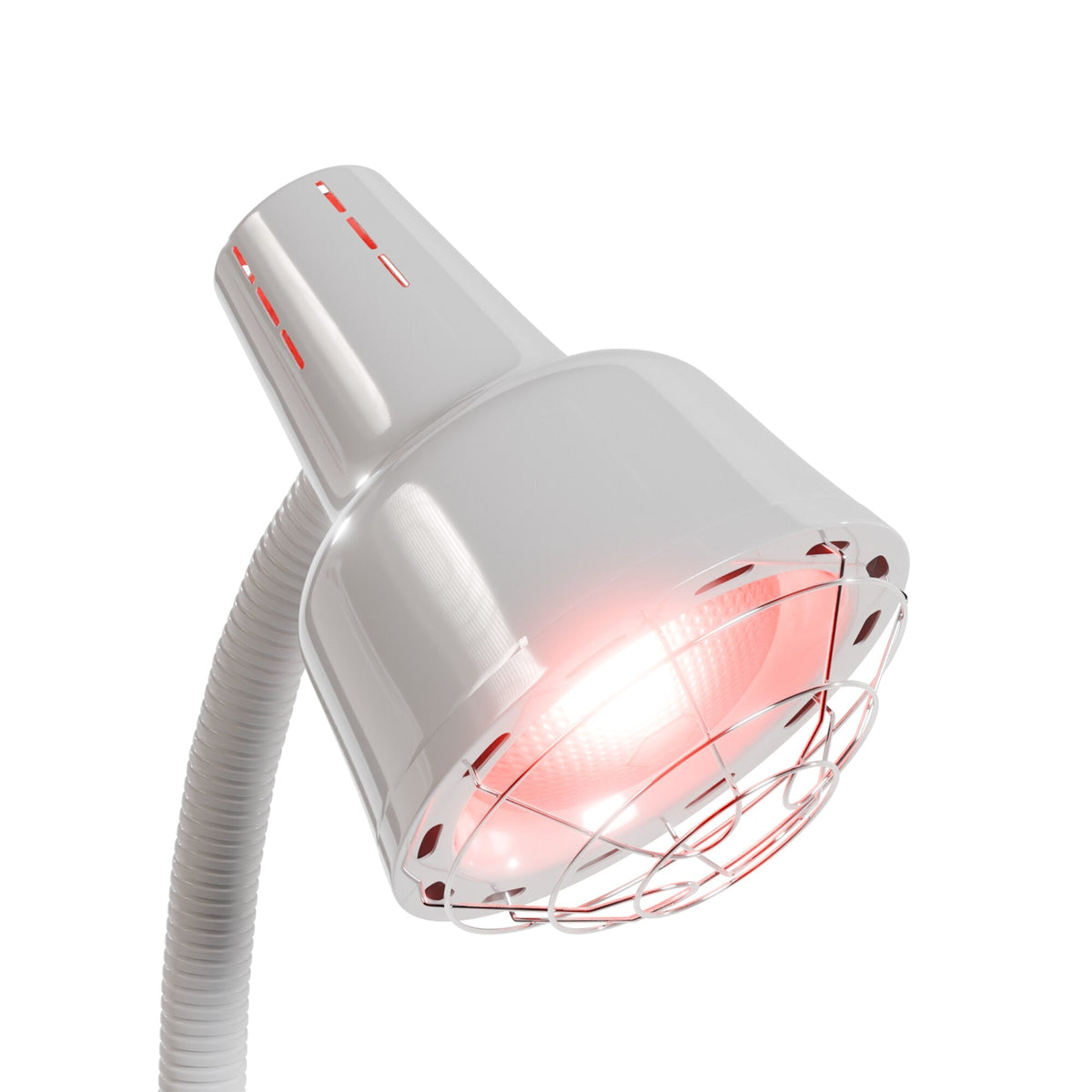
The Resty 275W and 550W lamps work differently from a panel. Each head holds a red infrared bulb of the short-wave kind. Instead of one narrow band it gives off a broad spread: infrared in the IR-A and IR-B bands, plus visible red light, which is why the bulb glows red. You notice the output as warmth on the area the head faces.
So the two products are described by different numbers. A panel names its wavelengths, because the narrow band is the point. A heat lamp names its power, 275 W per head, because warmth is the point.
What far-infrared usually means
Far-infrared is the long-wave end of the spectrum. Definitions differ: in physics texts it can mean only the very longest wavelengths, while in heater and sauna marketing it usually means wavelengths of several micrometres and longer, in the IR-C band. Every warm surface gives off long-wave infrared, from a radiator to a warm stone to your own body. In shops the word appears on carbon and ceramic heater panels, infrared saunas, mats and clothing, usually without a wavelength.
Why Resty does not call its lamps far-infrared
Our lamps use a short-wave bulb whose output is described as IR-A, IR-B and visible red light. Calling them far-infrared would describe a different kind of heater, so we do not. On our lamp pages you will find the words infrared heat lamp, the power of each head and how the lamp is set up, and you can judge the warmth for yourself.
Reading a box or a product page
- A single wavelength in nm usually means LEDs; a band or no number at all usually means a bulb or a heating element.
- Watts tell you how much electrical power a product uses, not which wavelengths it gives off.
- "Infrared" on its own could mean anything from a near-infrared LED to a long-wave heater, so look for the band or the wavelength.
- A glow you can see comes from the visible part of the output; the infrared part is invisible either way.
Which product matches which word
Narrow red and near-infrared light from LEDs: the MARS 400 red light panel. Warmth from a short-wave infrared bulb on a stand: the 275W single-head lamp or the 550W double-head lamp, both in the infrared heat lamp collection. Our infrared lamp page has more on the lamps, and how to use an infrared lamp covers distance and time.
Quick answers
Is near-infrared hotter than far-infrared?
Neither word says how hot something is. The band only tells you where the light sits on the spectrum; how warm it feels depends on the power and the distance.
Is the red glow of a heat lamp the same as a red light panel?
No. The glow of a heat lamp is the visible part of a broad output from a bulb. A panel uses LEDs at set wavelengths, for MARS 400 about 660 nm and 850 nm.
Why does the NIR mode of MARS 400 look almost off?
Its LEDs work at about 850 nm, just past what the eye can see, so only a faint red glow is visible while they are on.
Use and safety
- Light you cannot see still reaches your eyes: wear the protective glasses supplied with MARS 400 in every mode, NIR included.
- Do not look directly into an infrared heat lamp.